




Policeman Who Sang and Did So Much More
240th in the series Tales from Pioneers and Soldiers Memorial Cemetery…
By SUE HUNTER WEIR
Louis Solberg quickly became one of the most respected Minneapolitans; he was an early Norwegian immigrant at age 33 in 1868.
He died thirty-nine years later.
He was buried in a grave
next to his infant son.Their graves have no markers.
However, he was described as
“one of our most gentlemanly policemen…having an excellent record for ability
and honesty.”
In 1872 he was one of the first ten patrol officers appointed after Minneapolis and St. Anthony merged. George Brackett, elected mayor in 1873, charged the Police Force with cleaning up the City. Solberg and colleagues spent much of their time on stakeouts and patrolling of saloons in the City’s Red-Light District and “cleaning the City of early-day crooks.”
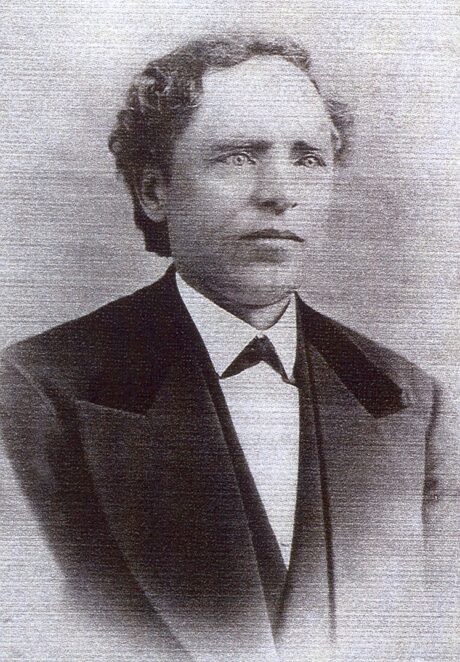
There are no reports that Solberg injured or killed anyone. A few report him firing warning shots at suspects. He fired at a man who had stolen a team of oxen, at a man who was breaking into a saloon, and at a man who “refused to move on.” He responded to stabbings and fistfights during drunken brawls in saloons and brothels. He literally put out fires and rescued a fellow officer from a man who “fought like a maniac, biting, kicking and striking with impunity.”
Solberg, described as “one of our most gentlemanly policemen,” had a couple of near misses. In 1875 he responded to a call about a domestic disturbance and was attacked by a hatchet-wielding “confirmed inebriate” who had assaulted his wife and daughter. When Solberg entered the house, the man swung his hatchet at Solberg who disarmed him and “floored him” before hauling him off to jail. In 1879, Solberg responded to another domestic call. The woman’s husband, who was drunk, fired a shot through the door, nearly missing Solberg who then wrestled his attacker to the floor and arrested him.
But there were some lighter moments in his career as well. He returned lost and stolen property, returned a lost 2-1/2-year-old boy to his parents, stopped a runaway horse, and escorted a homeless man, who had not eaten in three days, to jail where he “gave him a ‘big feed’ and put him to bed.”
It was likely that it was those acts of kindness that made him something of a media darling. In his Obituary, he was described as “…having an excellent record for ability and honesty,” and as someone “who straightened out many beats that could not be handled by other policemen.”
In 1874, The Tribune had jokingly claimed that Solberg had issued a warrant “searching for a wife.” It must have worked. On December 24, 1874, he married Mathilda (Mattie) Lysne. In 1875 Mattie gave birth to their first child, a son named Lawrence. In February 1877, when Lawrence became ill, Solberg took two days off to spend time with his son. The Tribune expressed the hope that the little boy would “speedily recover,” and that seems to have been the case, but only for a while. Lawrence died on July 8, 1877, from dentition, at the age of one year and four months. The couple had three more children, all of whom survived to adulthood.
In addition to being one of the first, if not the first, Norwegian police officers in Minneapolis, Solberg was a founding member of “Lyren,” an all-male quartet who carried on a valued tradition of their Norwegian culture. The group was founded in 1869 and for several years performed at a number of Scandinavian cultural events and celebrations.
He was one of the founders and an active member of Our Saviour’s Lutheran Church, the third oldest Scandinavian congregation in Minneapolis. He was selected as a delegate to the Hennepin County Republican Convention in 1875. In May 1882 he appeared before the City Council where he presented a petition on behalf of his fellow police officers requesting an increase in pay.
Four months later, he resigned from the police force and opened a barbershop, a business that he pursued for only two years. After that, he held several different jobs including owning a feed store and selling real estate.
He died from pneumonia on August 25, 1907. He was 72 years, two months old. He is buried in an unmarked* grave next to his infant son.
*More than 90% of Cemetery’s graves have no markers.