



By OWÁMNIYOMNI OKHÓDAYAPI
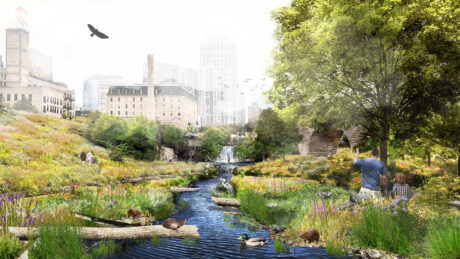
After nearly a decade of relationship building, community conversations, and reimagining what the riverfront could be, Dakota-led nonprofit Owámniyomni Okhódayapi has unveiled its design for restoring the land and water at Owámniyomni, just north of the Phillips neighborhood. The project area includes a five-acre site adjacent to the Upper Lock on the Mississippi Riverfront, along with three additional acres managed by the Minneapolis Park & Recreation Board.
Owámniyomni, known to many as St. Anthony Falls, has been a sacred place for Dakota and other Indigenous peoples since long before Minneapolis existed. The land holds significant spiritual power for the community as a space where families have gathered to pray, hold ceremonies, and welcome new life into the world. Settler industrialization of the Mississippi River reshaped the land for milling, power, and other industries that erased much of the original landscape.
Today, Owámniyomni Okhódayapi is working to transform the area into a place of public education, community gathering, and healing through cultural and environmental restoration. The project is led by Dakota voices and values. The unveiling of this new design marks an exciting and important step toward realizing that vision.
Led by a team of Dakota Knowledge Keepers representing multiple Dakota Tribes and communities, the design centers Dakota relationships with land and water.
“The design emphasizes interconnectedness – uplifting the intrinsic relationship between land, water and other relatives – while restoring habitat and creating a welcoming space that will benefit the community for generations to come,” said Shelley Buck, president of Owámniyomni Okhódayapi.
Key features of the design include:
- Restoration of the river bluff by recreating the site’s natural limestone formations.
- Reintroduction of Native plant species, including oak savanna and upland prairie, using seeds and soils sourced from Dakota Tribal lands in Minnesota.
- Transformation of water and shoreline, including the re-creation of a 25-foot water cascade over the original escarpment and the addition of access points for visitors to physically connect with the river.
- Ecological restoration of the riverfront and natural habitats supporting migratory birds, fish, and wildlife.
- Creation of ADA-accessible pathways, connecting Owámniyomni and the riverfront with the Stone Arch Bridge and extensive Minneapolis trail network.
The design process intentionally integrated Dakota language, teachings, and ways of living, creating a space that reflects the stories and values of the site through the Dakota lens. Design partners for the project included GGN, Full Circle Indigenous Planning + Design, and Duval.
For many involved, the project represents more than just land beautification. “This project isn’t about building monuments; it’s about rebuilding relationships with the river, the land, the wildlife and with ourselves,” said Juanita Corbine Espinosa (Spirit Lake Nation), a Dakota Knowledge Keeper on the team.
Owámniyomni Okhódayapi has also worked closely with Minneapolis residents to ensure community voices are reflected throughout the process. Mayor Jacob Frey called the announcement an important step in “transforming our riverfront into a space that honors the Dakota people and welcomes everyone to connect and learn. Owámniyomni is a showcase for what makes Minneapolis special. When we put Dakota voices and values at the center, we show who we are as a community.”
Construction will move forward in two major phases. The land transformation, which includes site preparation and planting, is targeted to begin in 2026. During this time, the second level of the former U.S. Army Corps of Engineers visitor center building and the Upper Lock parking lot will be removed. The water transformation, focused on the new cascade and shoreline restoration, will follow in 2027-2028.
To bring the design to life, Owámniyomni Okhódayapi is leading a $60 million fundraising campaign, with $35 million already secured from early supporters, including Paul and Mary Reyelts, Mark and Nancy Wilson, the McKnight Foundation, the Bush Foundation, the Minneapolis Foundation, the State of Minnesota and several private donors.
To view the designs, visit: http://www.owamniyomni.org/design.