




‘Tales from Pioneers & Soldiers Cemetery’ Archives
Tales from the Cemetery: Righting History
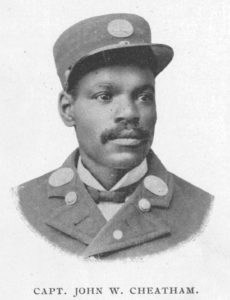
Bryan Tyner, Minneapolis’ first Black fire chief, pays tribute to Captain John Cheatham, Minneapolis’ first Black firefighter. By SUE HUNTER WEIR Something important happened in Minneapolis at 10 a.m. on Thursday, March 17, 2022. Street signs along the nine-block stretch of road between 34th Street and 43rd Street in South Minneapolis were replaced. What had been known as Dight Avenue became Cheatham Avenue. It’s the kind of change that causes some folks to rage about “cancel culture,” but others will see it for what it is—honoring John Cheatham, an honorable man whose contributions to the city’s history should have been recognized long ago. Charles F. Dight, a Socialist, served on the Minneapolis City Council from 1914 to 1918. He was one of three Socialists on the City Council at the time but the only one who lived in what was more or less a tree house that he built on 39th Avenue and Minnehaha Creek. He was described as a “conservative Socialist” [...]
Tales from Pioneers & Soldiers Cemetery: Bad Luck Followed Him
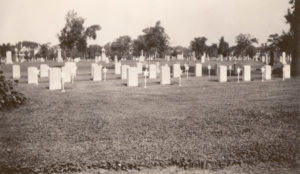
By Sue Hunter Weir The Grand Army of the Republic Block which was established to prevent Civil War veterans from being buried as paupers. The block of graves was purchased in 1870-71, and Arthur Pruitt, who died in 1874, should have been buried here. For some reason he was not and was buried in an unmarked grave in the cemetery's paupers' section. Photo credit: Minnesota Historical Society, 1938. Bad things can happen to people for any number of reasons. Some people make bad decisions. Others simply have bad luck. Arthur Pruitt may well be one of the unluckiest people buried in the cemetery. The last ten years of his life was a series of tragedies, all of them beyond his control. Arthur Pruitt was born in Kentucky sometime around 1837. He married Irene Elizabeth Tribble in Scott, Illinois on May 21, 1857. On May 7, 1864, he enlisted in Company B of the 27th Illinois Infantry. He signed on for 100 days. His military records state that he was 28 years old, that he was 5 [...]
A Grandson remembers his Grandfather
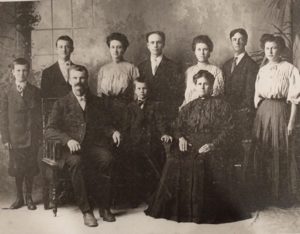
Tales of Pioneers and Soldiers Cemetery by Sue Hunter Weir Emilie and William Gaspar with their children Photo Courtesy of the Gaspar Family William Gaspar had a dog named Brownie, who loved to eat chocolate-covered peanuts. When William went to visit his son Joseph, in Loretto, Minnesota, he would walk Brownie to his son’s grocery store and buy him a treat. These are small things, and certainly not the most important things that William did in his life, but they give us a sense of who he was, that other types of information - lists of dates and places - cannot. Emilie Gaspar, William’s wife, was the second person buried in the cemetery after the City Council reconsidered an earlier decision not to allow burials after 1919. Emilie met the criteria for an exception—she owned a plot, and other members of her family were already buried there. Emilie’s mother, Mary Ann Klapperich Kelly Gaspar, was buried there, as were Mary Ann’s first two husbands. [...]