




‘Tales from Pioneers & Soldiers Cemetery’ Archives
Tales From Pioneers and Soldiers Memorial Cemetery
179th in a Series By SUE HUNTER WEIR Emeline Baker Balch 1830-1867 The Cemetery is listed in the National Register of Historic Places in part because of its ties to the anti-slavery movement. Its original owners, Martin and Elizabeth Layman, were members of the First Baptist Church of Minneapolis which was closely associated with that movement; and there are several others buried in the cemetery, including a number of women, who had ties to both the anti-slavery and temperance movements. It is hard to gauge the exact nature of their involvement since very few of the women who died during the cemetery”™s early years left first-hand accounts of their lives, but there can be little doubt about what they believed. Emeline Baker Balch was born in Onondaga, New York on 20 March 1830. When she was 14 years old, Emeline and her family moved to Aurora, Kane County, Illinois. The town of Aurora was settled by New Englanders who tended to migrate [...]
Tales from Pioneer and Soldiers Memorial Cemetery
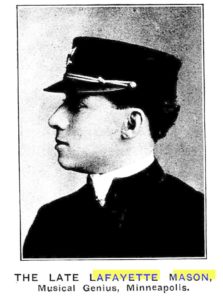
178th in a Series By SUE HUNTER WEIR Lafayette Mason””One Mpls.”™ First Black Firefighters Musician, Artist, and Southside High Football Captain Other than some graffiti on about a dozen fence pillars, the Cemetery was untouched during the protests on Lake Street. The graffiti was gone within a few days but the stories about the lives of those who are buried inside the gates continue. It”™s obvious to passersby that the Cemetery is old. What is less obvious is that the Cemetery is listed in the National Register of Historic Sites because of the people who are buried there. For the most part they were not famous but collectively their stories tell how the city and state were built. Some of them had ties to the early abolitionist and anti-slavery movements in Minnesota and others because it was a favored burial site for members of the early African-American community, many of whom led [...]
Tales from Pioneers and Soldiers Memorial Cemetery: Plenty Work to be done-Revive WPA
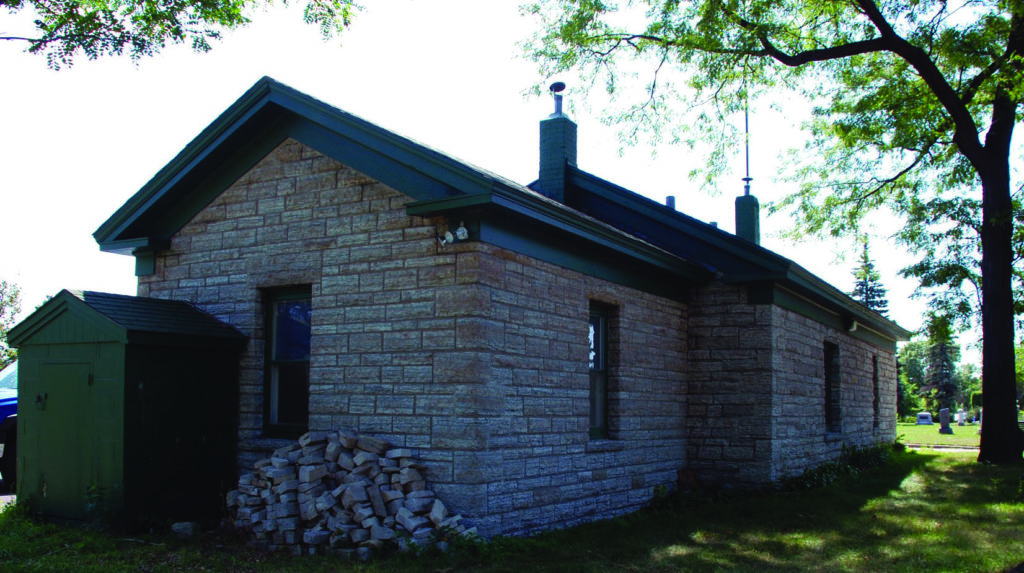
By SUE HUNTER WEIR 177th in a Series If you look closely at the east or west side of the Caretaker”™s Cottage, most of which was built in 1871, you will see a subtle difference between the back room and the two front rooms. That difference is how you can tell that the backroom is a fairly recent (only 80 years old rather than 149 years old) addition. The roofline is a little lower but that”™s not an age difference. The masonry is identical except for one thing: the top and bottom edges of the newer stones are perfectly straight while the stones on the older rooms are rough-cut. The new stones were cut using power tools while the old stones were cut by hand. Caretaker Cottage 1940 masonry straight-cut edges differ with 1871 hand-chiseled. One of five Phillips buildings on the National Register of Historic Places. Photo: TIM McCALL It”™s been a challenge to put a date on the “new” addition but the answer was hidden in the [...]