





‘Tales from Pioneers & Soldiers Cemetery’ Archives
Cemetery markers are the “tip of the iceberg” and a book cover of family stories
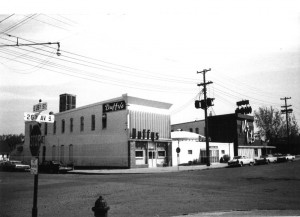
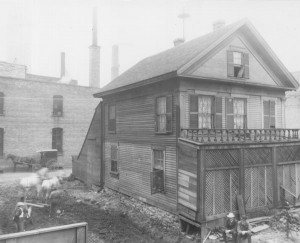
At 26th St. and 26th Ave. George Thompson II (left photo) owned the Exchange Hotel and Duffy”'s Bar here in bottom right photo in the area that became known as the Hub of Hell because of shootings, killings, labor riots and gangster hangouts. Top 1965 photo of Duffy”'s and Mr. Nib”'s Nightclub. Duffy”'s Tavern became Norma Jean”'s Nightclub painted a garish pink from 1979-1984. By Sue Hunter Weir August 8th 2014 was a busy day in the Cemetery. Five new markers were placed that day. Ron Thompson honored George E. Thompson II and August and Maria Seeber. Ron Thompson of Naples, Florida, purchased three of them: One was for his grandfather, George E. Thompson II, and the other two were for his maternal grandparents, August Friederich Seeber and Maria Werner Seeber. August and Maria Seeber arrived in Canada from Germany in 1869. Their daughter, Louise, who was born in Germany in 1866, came with them. The family settled in Northfield, Minnesota, where [...]
First Minneapolis Library start-up money donor, Dr. Kirby Spencer, trusted and cared for by Armstrong English
By Sue Hunter Weir Dr. Kirby Spencer, one of Minneapolis”' first dentists, is generally credited with providing the money to start Minneapolis”' Athenaeum* which functioned as the city”'s first public library. Eventually the Athenaeum evolved into the Minneapolis Public Library and more recently into the Hennepin County Library. His was one of the early burials in Pioneers and Soldiers Cemetery and even though he was later disinterred and reburied at Lakewood, he remains one of the cemetery”'s most written about residents. Another man, Armstrong English, who most likely has never been written about, took care of Spencer in the weeks and months before he died. English and two of his infant sons, both infants, are still buried in Pioneers and Soldiers Cemetery. Spencer, a private and very eccentric man, fell ill in the early months of 1870. As his health began to fail, he became increasingly reclusive, living “a sort of hermits life” in his office [...]
From Greek ΦιλανδÏος (Philandros) “friend of man”; Philander Prescott
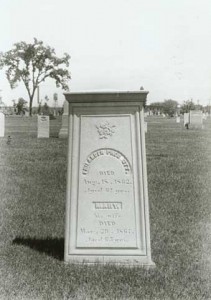
Prescott, killed in 1862 at the Dakota Conflict after warning U.S. 6 years earlier of inevitable trouble without changes, was buried on the prairie and reinterred later at Layman”'s Cemetery when Mary died in 1867. His tombstone was encased ca. 1938 by the Hennepin History Museum in order to preserve it longer. By Sue Hunter-Weir For the first hundred years of the Minneapolis Pioneers and Soldiers Memorial Cemetery”'s history, Philander Prescott was the cemetery”'s most written about pioneer. In more modern times he is remembered by those with a keen interest in the Dakota Conflict of 1862, otherwise he is mostly forgotten. Prescott arrived at Fort Snelling in 1819 and lived in what later became Minnesota until his death. Over the course of the years he, like many pioneers, did many jobs in order to survive. He was a sutler (i.e., ran the store at Fort Snelling), trapper, fur trader, translator, Bureau of Indian Affairs agent and farmer. He married Spirit of [...]