





By MATTIE WONG
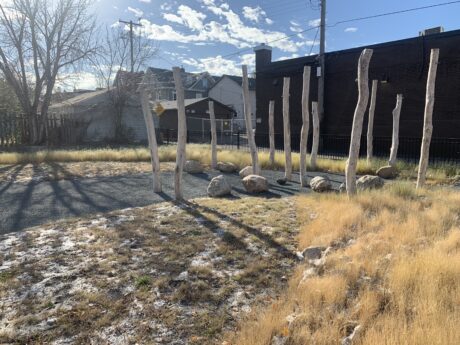
This past year, the Lake Street Council has been supporting the transformation of empty lots on Lake Street through their Lake Street LIFT! initiative.
One lot, at the corner of Lake and Columbus, explores what a public/private park could look like and how it might operate.
Designed to be a temporary park because the original owner wishes to redevelop it in the future, this park had to be safe, sturdy, interesting, and removable.
The lot had some challenges that made these goals difficult. Hypodermic needles covered the lot, meaning that to make the site safe, the top six inches of the original soil would have to be scooped and mounded into a hill, compacted, and then capped with one foot of uncontaminated top soil. This method starts the park off on a safe foot.
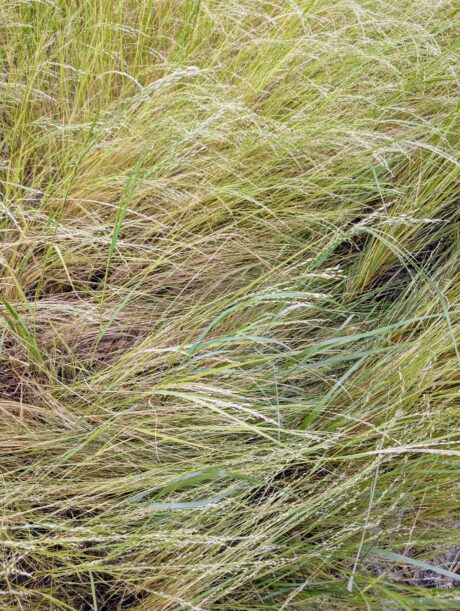
Natural materials were high priority, and the groundplane consists of crushed gravel, native buffalo grass, and teff. The buffalo grass will only grow to about four inches high, and grows best in hot and dry conditions. No mowing required! It is seeded and growing in the grass “beaches” of the park.
Teff, a grain from Ethiopia, was the cover crop this year for little bluestem that was seeded and will start growing next year. Teff was chosen because it grows best in the heat of the summer, and will die over the winter, becoming a layer of hay to protect the little bluestem beneath.
Poles made from black locust trees stand in one corner of the park, and are the structure for shade sails during summer months. Black locust trees are known as “weed” trees on farms because they spread so quickly and are hard to get rid of. However, they are also naturally anti-microbial, anti-bacterial, resist rot and insect damage, making them perfect candidates for setting in the ground without concrete. This was an important consideration given the temporary nature of the park.
Volunteers have stepped up to plant a few pockets of flowering plants in the spring, as well as to help pick up trash as necessary. Because this isn’t a public park, volunteers and visitors are so necessary to upkeep the park without city maintenance.
There is a low fence around the park, which is locked at times. However, as the idea of the private/public park evolves, the park should be able to be accessible more often to those passing by on Lake Street.
To learn more about the design of the park, visit http://www.radiclelandcollective.com and visit the project page.