




250th from Tales from Pioneers and Soldiers Cemetery…
By SUE HUNTER WEIR
Minneapolis’ Maternity Hospital in 1887.
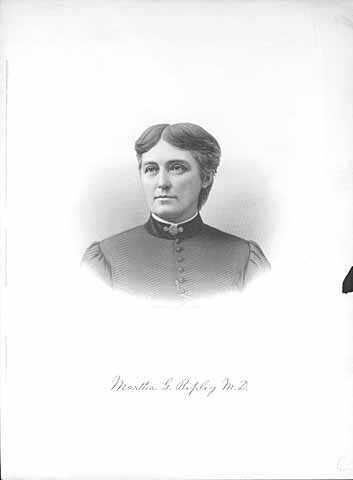
In 1887, Dr. Martha G. Ripley opened the city’s first hospital whose mission was to serve
pregnant women and their infants. This was at a time when 95% of women had their babies at
home. The infant mortality rate in 1885 is only an estimate, and ranges from 250-300 infant
deaths per 1,000 live births. Dr. Ripley dedicated the next 25 years of her life to changing that.
Infant mortality rate in 1885:
250-300 deaths per 1,000 live births.
She wasn’t always successful. Seventy of the people (two adults and 26 infants) who are
buried in the cemetery died in the Maternity Hospital. The first burial was 22-year-old Agnes
Clayton, one of the two adults. She died on April 15, 1887, from puerperal fever, a postpartum
bacterial infection. Agnes, like a majority of the women who gave birth in the Maternity Hospital,
was single. Little else, other than that she was born in Canada, is known about her. It appears
that her baby survived.
Agnes was typical of many of the women who gave birth at the hospital. The majority
were young, single, and poor. Most were immigrants. Although the hospital had ties to many
local churches, it was non-sectarian and welcomed everyone including “those who professed no
religious belief.” Some patients could pay for their care, but the majority could not. Their care
was covered by charitable and philanthropic donations.
“The saddest cases of all are the young girls who have been betrayed through their love and trust in some man who has sought and accomplished their ruin.”
About two-third of the women were single. Some had been abandoned by husbands or
lovers, others were widowed. Dr. Ripley railed against the double standard that stigmatized
women while allowing men to walk away from their obligations. In 1904, the hospital’s matron,
Mary Burnett, wrote: “The saddest cases of all are the young girls who have been betrayed
through their love and trust in some man who has sought and accomplished their ruin.”
And many of the hospital’s patients were girls. The hospital’s 1915 annual report said
that 13 of the patients who gave birth that year were between the ages of 13 and 17. Another 23
were between the ages of 18 and 21.
The hospital ensured that the mothers and babies would be able to thrive after they were
released. They provided training in a number of domestic skills and helped women find jobs. But
not all mothers had the resources to keep their children and the hospital functioned as an
adoption agency carefully screening applicants to make sure that the babies were placed in
good homes.
The effects of poverty and lack of prenatal care are evident in the causes of babies’
deaths. Fifteen were stillborn and another nine died as a result of having been born
prematurely. Thirteen others died from “marasmus” (malnutrition). Some died from convulsions
most likely caused by bacterial infections or communicable diseases.
Two-thirds of the babies were treated for free. The money to pay for their care came
from a variety of sources, much of it raised by the hospital’s board of directors. Dr. Ripley was
an ardent feminist and suffragist who appeared on stage with Susan B. Anthony and Elizabeth
Cady Stanton. Not surprisingly, the hospital’s directors and board members were all women.
They were relentless in their fundraising efforts, soliciting donations from churches, businesses
and individuals including their well-to-do husbands. In addition to cash donations, they collected
food, clothing, bedding, furniture, anything that its patients needed.
Over the years the hospital treated thousands of women and babies with rather
remarkable success, but the infants buried in Minneapolis Pioneers and Soldiers Memorial
Cemetery were not the only ones who died in the hospital. There is a curious gap in the records
from about 1887 until 1900. The Hennepin County Coroner recorded deaths at the hospital
during those years, but it is not clear where the babies are buried.
The hospital expanded several times before settling on its final location in 1916 at 301
Queen Avenue North. Dr. Ripley did not live long enough to see it. She died on April 18, 1912,
having been in poor health for about two years. That did not stop her from working. Her death
was front-page news and the headline in the Minneapolis Journal announcing her death read:
“Dr. Martha George Ripley, Veteran Woman Physician, Dies as a Result of Overwork.” She is
buried in Vermont.
The babies are buried in several sections of the cemetery but the most common is
Section H, the paupers’ section. None of the babies who died in the Maternity Hospital have
markers or headstones.
SUE HUNTER WEIR is Chair of Friends of the Cemetery, an organization dedicated to preserving and maintaining Minneapolis Pioneers and Soldiers Memorial Cemetery. She has lived in Phillips for almost 50 years and loves living in such a historic community.