News & Views of Phillips Since 1976
Sunday December 14th 2025






 Reload document
  Open in new tab
 Gratitude to Readers
The Alley Name
The space between dwellings of people is an alley. It is called an alley between two dwellings or rows of dwellings. The space between two rows of trees is an allee’ or an alley.
The sounds and sights in those spaces are common and include everyday activities like taking out the trash, fixing one’s car, greeting neighbors, etc. The alley seemed a proper name for a newspaper that helped people engage with one another.
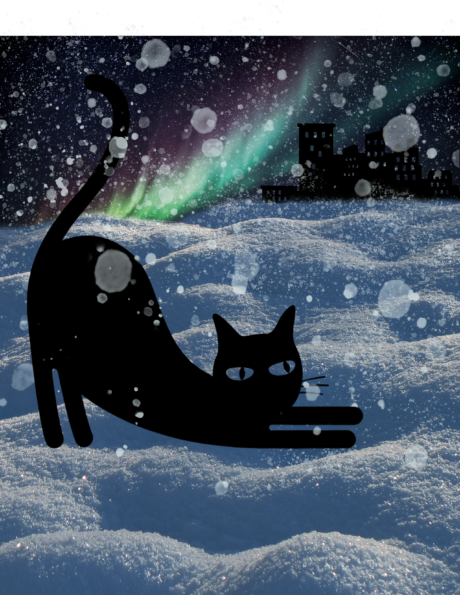
The Black Cat Logo
A logo for the alley naturally became a black cat because of its ability to be independent yet friendly, curious yet polite, pensive yet joyful, loves fish and mice yet won’t chase red herring, and watchful yet playful. Some cultures see a black cat as good fortune and other cultures the opposite which also fits for the alley’s community that includes many cultures and diverse ethnic origins.
The Community
The alley newspaper began in 1975 as the Newspaper of the Phillips Community partially to dispel the derogatory remarks and stereotypes made by mainstream media to describe the people of the area.
Decades later, the tendency evolved where many people imagine the boundaries of Phillips being more fluid like in the song “Imagine” by John Lennon and Yoko Ono and the poem “Mending Wall by Robert Frost that includes, “before I would build a wall, I would ask who am I walling in and who am I walling out, lest I give offense.”… Read the rest “Gratitude to Readers”
Harry Hurlburt: A Tale of Kindness and Compassion
241st edition of Tales from Pioneers and Soldiers Memorial Cemetery
By SUE HUNTER WEIR
Every now and then it’s good to be reminded that there are kind and compassionate people in the world. This seems like one of those times. An earlier version of this story has appeared in the alley before. We have received more comments about this story than any of the many cemetery tales that the alley has published over the past 25 or so years. It is a story about kindness and generosity, qualities that sometimes seem to be in short supply. Thanks to Tim McCall for providing additional information about Mr. Howard’s military service and for his many contributions to preserving the cemetery’s stories.
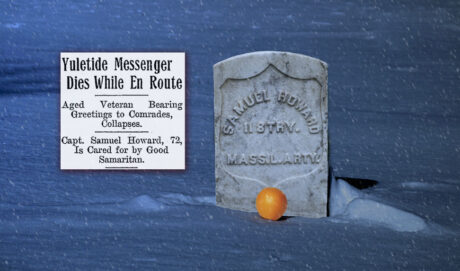
The story of Captain Samuel J. Howard’s death was front page news on December 20, 1908. The story of his death was a human-interest story—a holiday story about kindness and generosity, and a story about friendship between two strangers. Because of that friendship, Captain Howard, who had no known connection to the city of Minneapolis, came to be buried in Minneapolis Pioneers and Soldiers Cemetery.
Captain Howard was a 72-year-old Civil War veteran who was traveling from Olympia, Washington, where he lived in a veterans’ home, to Boston for Christmas.… Read the rest “Harry Hurlburt: A Tale of Kindness and Compassion”
Welcome to the Roof Depot’s Future: The Farm That Changed Minneapolis
from the series Phillips Imaginary…
By ERIC ORTIZ
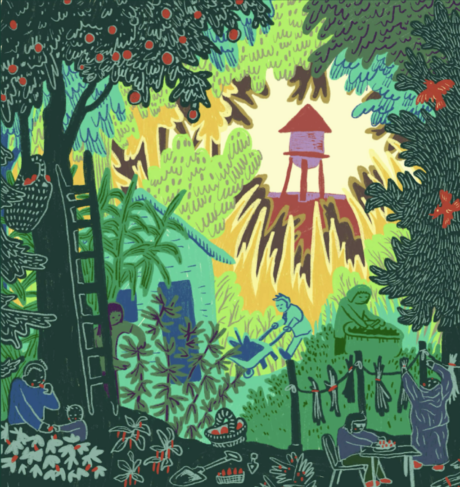
A decade of food, jobs, and community wealth has made East Phillips a global model of resilience, justice, and health.
Disclaimer: This is a visionary, fictional article imagining what could happen if the City of Minneapolis strikes a fair deal with East Phillips for the Roof Depot site.
The East Phillips Urban Farm turned 10 this year.
What began as a bold vision for a polluted industrial site in south Minneapolis is now a living testament to what happens when communities choose justice, health, and resilience over neglect.
“We stopped asking for change,” said a longtime East Phillips resident. “We became the change, and the city followed our lead.”
Ten years ago, in 2025, East Phillips faced generations of disinvestment and environmental harm. Per capita income was under $19,000. Nearly 30 percent of residents lived in poverty. Asthma and diabetes rates were far above city averages. And only 3.2 percent of residents worked in the neighborhood.
In 2035, the neighborhood tells a different story. Per capita income has nearly doubled, poverty has fallen, health outcomes have improved across the board, and more than a third of residents work locally.… Read the rest “Welcome to the Roof Depot’s Future: The Farm That Changed Minneapolis”


Keep citizen journalism alive!