




from the series Peace House Community Journal…
By MARTI MALTBY
Food Deserts are neighborhoods where residents lack adequate access to food. Residents of a country as wealthy as the United States shouldn’t have to worry about getting enough to eat. In other words, we shouldn’t have Food Deserts.
Unfortunately, in a country where economic statistics carry more weight than human need, things don’t run as they should. In the last six months, two feeding sites that served take out dinners in Ventura Village closed. Between them, they were serving over 700 meals a night. I don’t know the situation in the other neighborhoods covered by the alley, but I suspect many residents there rely on feeding sites or food shelves to meet one of the most basic human needs. Economics says that the United States is still the wealthiest country in history. The number of people going hungry say that economics is measuring the wrong things. Understandably, a lot of the people going hungry would probably say something much more graphic about any economics that claims things are as they should be.
Of course, it’s easy to say that everyone should have enough food. There’s no controversy there. The challenge is distributing the food properly when the most basic assumptions that drive political decision-making focus on abstract concepts rather than concrete details. The Invisible Hand, Gross Domestic Product, and Average Household Income have their place in explaining how money moves from one place to another, but they don’t consider how many blocks someone has to walk to get groceries for their family, or even if they can get groceries. Yes, there are statistics to measure those sorts of concerns, but they get less attention and don’t affect decision-making as they should.
Which brings us back to Food Deserts. South Minneapolis is facing greater challenges in feeding itself. Inflation is going up, making it harder for people to afford the necessities. Therefore, more people need food assistance, but the food assistance is disappearing. And so, the Food Desert expands. Block by block, the situation is getting worse.
There won’t be an easy solution to this, but there does need to be a solution. A group of nonprofits and other neighborhood organizers are already working to get more food into south Minneapolis. We have contacted the County Commissioner, the Mayor, and the Council Member for this area to emphasize the need for action and additional resources. Neighborhood and business associations also have their role to play. We will see if together we can put human needs before statistics.
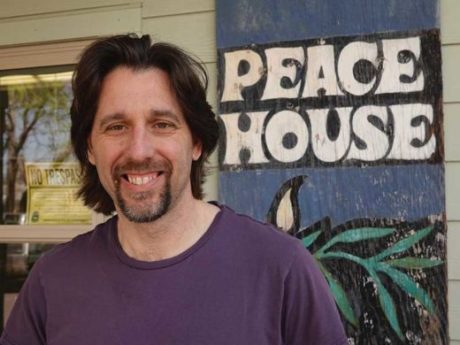
MARTI MALTBY is an avid cyclist, Director at Peace House Community, and an obnoxiously proud Canadian.