




‘Tales from Pioneers & Soldiers Cemetery’ Archives
Tales: Remembering the Fallen, Memorial Day 2023
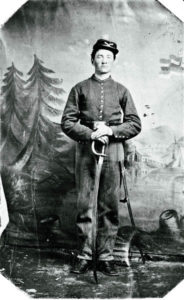
Tales from Pioneers and Soldiers Memorial Cemetery 210th in a Series By SUE HUNTER WEIR Thousands of people gathered at the intersection of Minnetonka and Washington Avenues on May 30, 1870. They formed a parade that stretched for two miles as they marched to what became known as Layman’s Cemetery. Flags were flown at half-mast and business throughout the city came to a standstill since “there were none in the stores to sell nor to buy.” The Civil War might have been over but the trauma remained. Disease and disability continued to claim lives. The war and its aftermath left unimaginable numbers of widows, orphans, and bereaved parents in its wake. The first division of the parade was led by the Fort Snelling Twentieth Infantry Band followed by members of the Grand Army of the Republic, a benevolent organization that advocated for veterans. Their motto was “Fraternity, Charity, and Loyalty.” They were followed by other former soldiers and their families.The [...]
Tales from Pioneers and Soliders Memorial Cemetary: 209th in a Series

There’s Always More to the Story: A Mother Waits and Watches By SUE HUNTER WEIR At first glance, Sabina “Louise” Johnson’s looked like an ordinary, uneventful life. But there was much more to her story than that. Sabina “Louise” Nordstrom was born in Orebro, Sweden on March 14, 1873. Her family sailed on the U.S. Celtic from Liverpool in 1879. On June 20th, they arrived in New York. Louise was six years old. Three of her siblings (Hulda, aged 9, Mathilda, aged 8, and Carl, aged 1) were also on board. Sabina “Louise” Johnson’s marker. During World War I, she sewed uniforms for American sailors and soldiers--perhaps even one for her son. Photo Credit: Tim McCall Three markers -- the small marker on the right is for Sabina Louise Johnson’s four-year-old daughter, Myrtle. The marker on the left is for Sabina’s younger sister, Ellen Nordstrom. Photo Credit: Tim McCall Her family first settled in North Dakota, where her sister Ellen was born on March [...]
South Side Destructor—Part II City Leaders (Finally) Arrive at a Solution

The exterior of the plant looks much as it did when this “state-of-the-art” incinerator was built in 1939. It cost about $250,000. Funding came from the city’s operating budget and from the federal government’s Works Progress Administration. Photo Credit: Tim McCall The 180-foot-tall smokestack was decommissioned in 1971. Today it is home to a red-tailed hawk. Photo Credit: Tim McCall By SUE HUNTER WEIR208th in a SeriesIn the summer of 1938, no one denied that Minneapolis needed a new incinerator to deal with its overabundance of garbage. The problem was not new: the debate about where to locate the incinerator had already dragged on for ten years and there was no solution in sight. Untreated garbage was piling up, creating a health hazard. From the beginning, the City of Minneapolis Engineer’s Office had favored what was referred to as “the so-called Layman’s site” (by that time, the cemetery was officially Minneapolis Pioneers and Soldiers Memorial [...]