




‘Tales from Pioneers & Soldiers Cemetery’ Archives
Rev. G.L. Morrill, populist preacher “wherever two or three are gathered!”

Calvary Baptist, People”™s Church””Hennepin Av, Wonderland Amusement Park, Nicollet Field Baseball Park, His Own Funeral COURTESY HENNEPIN LIBRARY SPECIAL COLLECTIONS G.L. “Golightly” Morrill, with a University of Chicago theology degree, broke away from established churches and founding an unorthodox “People”™s Church” in downtown Minneapolis. His Los Angeles Times Obituary noted, “Probably the most unique funeral service ever conducted was held here today when the voice of Rev. G.L. “Golightly” Morrill was heard preaching his own funeral service. The words were heard over the body of the noted writer and world traveler in a local funeral parlor this morning. They issued from a phonograph which was playing a record dictated by Morrill himself months ago in preparation for his final rites. After the sermon another record was placed on the machine and Morrill”™s voice was heard singing a religious [...]
Milton Worth – Ramsey Author with eyes on the sky found beauty on earth and, on Fort Road renamed Hiawatha Avenue
Tales from Pioneers and Soldiers Memorial CemeteryBy SUE HUNTER WEIR172nd in a Series If you could choose just one word to have inscribed on your grave marker, what word would you choose? Milton Worth Ramsey didn”™t get to choose his own word; he didn”™t even have a marker until almost 80 years after he died. He died in 1906 and his descendants placed a new marker on his grave some time in the 1980s. The word that they chose to sum up his life was “author.” And he most certainly was. According to his obituary, he was “for many years”¦identified with the literary life of the city”¦” He self-published four novels, and he is still recognized as having been an early science-fiction/speculative fiction writer. His first work, “Six Thousand Years Hence,” was published in 1891; followed by “The Austral Globe” (1892); “Future Dark Ages: a Story of a Trip Through a Dark Continent” (1900); and [...]
Unregulated, ill-equipped, unfunded “Baby Farms” filled a void for poor women
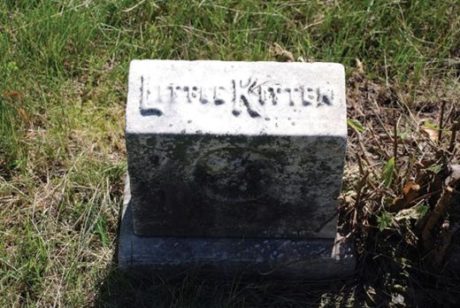
Mary Briggs, dies after 21 days of life Mary Briggs was only 21 days old when she died from diphtheria on February 13, 1916. As tiny as she was, her death had long-lasting consequences for the City of Minneapolis, especially for babies born to mothers living in poverty. Mary died at 3614 Grand Avenue in what was known as a “baby farm,” a privately owned boardinghouse for unmarried women and their babies. In addition to providing homes for “erring mothers” and “incorrigible girls” who were waiting to give birth, some baby farms served as adoption agencies. One woman advertised her business as a “private home for ladies before and through confinement.” She also advertised babies who were available for adoption””“Two pretty baby girls and a boy.” A few farms cared for children whose parents (usually mothers) had no one to care for their child while they worked. The city had a number of ordinances that were [...]