News & Views of Phillips Since 1976
Friday February 6th 2026




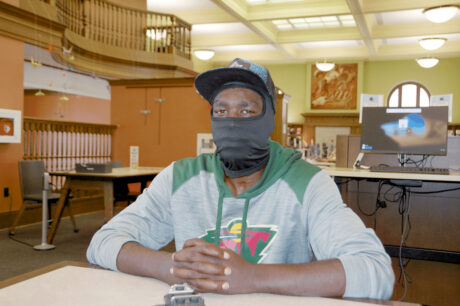
Phillips Voices: Derrick Herod
from the series Phillips Oral History Project…
The Phillips Community Oral History Project aims to document, amplify, and empower the multicultural and multi-generational voices of those in the Phillips Community to tell their own stories on their own terms.
This month, the alley will begin featuring voices from the Project in our monthly papers. To start, we are sharing excerpts from an interview with community member Derrick Herod, who was interviewed at Franklin Library.
Okay so could you just introduce yourself, your name, and your age if you want?
Derrick: My name is Derrick. They call me black. I’m 45.
Perfect. And what’s your relationship to this library or the area? The community?
D: I was uh, I ain’t got no relationship with this building but I come here often to charge my phone up or just get out and get away from the riff-raff outside.
Totally, totally.
D: I’ve been coming around here since the George Floyd incident and COVID. I used to be in the downtown area but now I’m over here. I live over here now, technically. I stay over here, but I’ve been coming around here before.… Read the rest “Phillips Voices: Derrick Herod”
The Hodsdons’ Family Secrets
from the series Tales from Pioneers and Soldiers Memorial Cemetery…
243rd in a Series
By SUE HUNTER WEIR
Jane and Ebenezer Hodsdon were among the early New Englanders who settled in what was to become Minneapolis. They moved here with their three young children from Maine in 1852, and a few years later purchased 100 acres of land at what is now the intersection of Bloomington Avenue and Lake Street. Their nearest neighbors were Martin and Elizabeth Layman, the original owners of the Cemetery.
Beatrice Morosco, the Hodsdon’s granddaughter, wrote a family history, The Restless Ones, that was published in 1965. It is a charming and lively, though not always accurate, account of the family’s early days in Minneapolis.
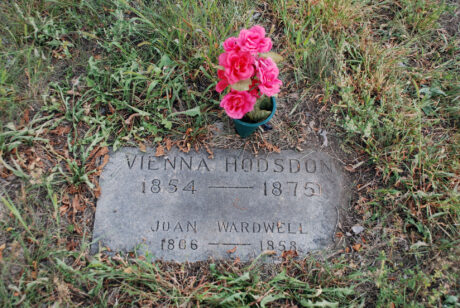
In 1855, a few years after the Hodsdons arrived, they were joined by Jane’s parents, George and Joan Robbins Wardwell. Martin Layman hired George to survey his land and offered him two burial plots in the Cemetery as payment. Only three years later, one of those graves was put to use.
Joan Wardwell was, as Morosco described her, “unsuited for the rigors of frontier life.”… Read the rest “The Hodsdons’ Family Secrets”
A Window into the Legacy of South Minneapolis’ Black Community
History is alive and well and local … in South Minneapolis
By SABATHANI COMMUNITY CENTER
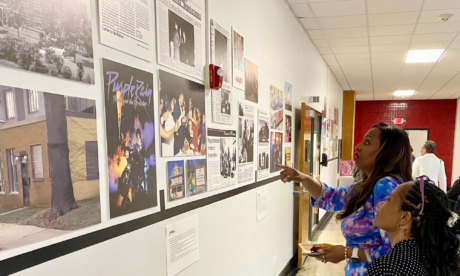
Editor’s Note: Every place has a story, but in our society, the most important stories are usually erased unless there is a deliberate effort to tend to them. Read on about a treasure in South Minneapolis that preserves the stories of dozens of amazing people who defined and strengthened (and continue to define and strengthen) the community that is South Minneapolis, as well as the world beyond its borders.
The Sabathani Living History Museum offers an immersive journey through the rich history of the Black community in South Minneapolis, celebrating resilience, artistry, and community triumph.
The museum’s corridors are lined with exhibits that celebrate trailblazers like Sharon Sayles Belton, the first African American mayor of Minneapolis, and Carl Eller, NFL Hall of Famer turned community advocate. They also honor educators like Dr. Richard Green and social servant Clarissa Walker, whose legacies embody dedication and excellence.
Collaborations with the Minnesota Historical Society, the University of Minnesota, and other local institutions provide an in-depth exploration of pivotal historical moments, including the impact of redlining and racial covenants. Despite these systemic barriers, the community’s strength shines through, as South Minneapolis created its own resources and programs to ensure collective well-being.… Read the rest “A Window into the Legacy of South Minneapolis’ Black Community”


Keep citizen journalism alive!