
News & Views of Phillips Since 1976
Saturday April 4th 2026






CUHCC Constructing a New Building; Remains Open to Patients
By ROLI DWIVEDI, MD, CEO
Starting in April, neighborhood residents will see major changes on the corner of Bloomington Ave and Franklin as the University of Minnesota begins construction on a new, state-of-the-art clinic building for the Community-University Health Care Center. The new CUHCC will have two stories, be nearly twice as big, and include new services such as physical therapy and imaging. Its new, onsite pharmacy will allow patients to fill their prescriptions after their medical, dental, or mental health appointment, adding to the clinic’s one-stop shop service model.
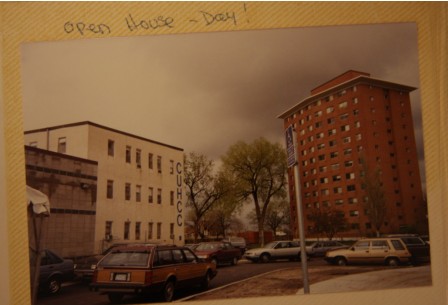
A community institution for 60 years
In addition to work beginning on the new building, 2026 also marks CUHCC’s 60th Anniversary. Started by two UMN Pediatricians and the Minneapolis Health Department in 1966, CUHCC first operated out of a small apartment building built in the 1800s. It lacked an elevator and air conditioning. The University constructed its current building in 1991. In 1994, CUHCC began pursuing designation as a Federally Qualified Health Center (FQHC). The clinic achieved full FQHC status in 2002 and receives federal funding to provide comprehensive healthcare services to everyone, regardless of their ability to pay. As an FQHC, the majority of CUHCC’s Board of Directors are current patients and the clinic offers a discount program that bases the cost of care on patients’ income and family size.… Read the rest “CUHCC Constructing a New Building; Remains Open to Patients”


 Reload document
  Open in new tab

Keep citizen journalism alive!

Greece’s Golden Age: Passion and/or Wisdom?
from the series Peace House Community Journal…
By MARTI MALTBY
Many years ago, I heard a debate about whether Greece’s Golden Age was represented by the great poets such as Homer, or by the philosophers such as Socrates, Plato, and Aristotle. Why should this matter to us now, thousands of years later? Because it might give us some insight into today’s situation.
Homer gave us epic tales involving a vibrant world of violent passions, both positive and negative. Wars were fought over trivial matters. Gods and men competed for glory. Each individual had unique powers and personalities.
By contrast, the philosophers sat around and discussed. Plato’s Republic, one of the classics of philosophy, contains no action other than people making speeches. Their goal is to discover reality (or however Plato phrased it; I haven’t read him in over 30 years). They focused on universal truths that applied equally to everyone, not individual people.
In our modern scientific, rational society, we side with the philosophers. We like to think we can understand, and therefore control, anything. We can master anything, from climate change to the common cold, if we can properly dissect and define it. Once we can understand it, we can manipulate it, and ultimately control it.… Read the rest “Greece’s Golden Age: Passion and/or Wisdom?”