News & Views of Phillips Since 1976
Tuesday December 16th 2025






Two exhibits at Hennepin History Museum focus on South Minneapolis


By Heidi Adelsman
Human Toll: A Public History of 35W
On view now through the end of 2022, Human Toll explores the community resistance and resilience to the construction of 35 W and illustrates how freeway construction destroyed and divided Black communities across the United States, amplifying the effects of systemic racism still felt today. With photographs, maps, oral histories and archival documents, Human Toll foregrounds the experiences of Black residents of South Minneapolis by exploring stories about displacement, housing discrimination, neighborhood division and environmental justice.
Human Toll was researched and developed by a diverse team of South Minneapolis community members and advisors working in collaboration with students and faculty of the University of Minnesota Heritage Studies and Public History program. Retired MnDOT employee Dr. Ernest Lloyd, who wrote his doctorate on the topic of 35W, served as both Community Advisor and Research Advisor on the team, assisting in interviewing community residents on the impact the construction of 35W had on their lives. As Dr. Lloyd noted during the exhibit’s opening event, “Recall as you drive down 35W that you are driving through what used to be someone’s kitchen or bedroom, through someone’s home now gone.” … Read the rest “Two exhibits at Hennepin History Museum focus on South Minneapolis”
Spooky Greetings from Women’s Environmental Institute
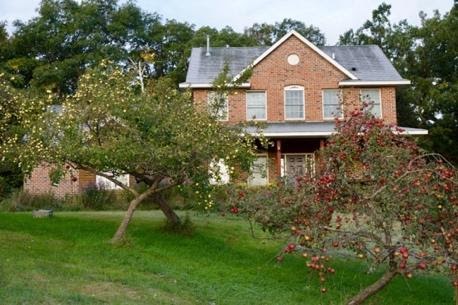
By Shelia Bland, Women’s Environmental Institute
Bugs, bees, bites, and bears
And oh, the blackest of nights
No chatter, or laughter or arguments outside
but silences, hoots, creaks, and scares.
If the moon is out the darkness abates,
but the full moon sky casts an eerie glow
It bears no semblance to streetlights!
Things glow in the dark,
And move across the black void
Then suddenly float away.
Crickets, frogs, wolves, and winds
Some sounds never heard before
And when there is no sound at all,
the silence threatens to swallow you whole.
Lost inside an emptiness
you cannot see
but also, cannot escape.
So profound is this silence
It dissolves all random thoughts
That filled your between-the-ears space.
You give in to perpetual wonder…
Welcome to the countryside—
A Back to the Future style trip Back to Nature!
A trip to Women’s Environmental Institute
Classes are available Free,
For those who live, work, play, or pray
In the Phillips Neighborhood
In October’s classes
Find food in nature
Ferment vegetables and make sauerkraut
Discover the healing power and many uses of herbs
Experience awesome techniques for growing your own fish and greens together
To sign up for a class,
visit us at w-e-i.org… Read the rest “Spooky Greetings from Women’s Environmental Institute”
Tales from the Cemetery: Tragedy Travels by Trolleycar

By SUE HUNTER WEIR
It can be hazardous moving around the city during road-repair and construction season. It is even more dangerous for the men and women who do that work. That is nothing new. On May 5, 1911, eleven workmen were repairing a streetcar track on Washington Avenue when they were struck by a streetcar. One of the men died, two others were seriously injured but survived, and the rest were not seriously injured.
The accident occurred late in the evening but word of what had happened spread quickly and within a short time, “nearly 100 infuriated Slavonians [sic]” arrived on the scene. They surrounded the car and dragged the driver, Julius Risan, out and beat him.
It took four policemen to disperse the mob. They took Risan, who was described as heartbroken, to the South Side Police Station pending an investigation and, no doubt, to prevent him from coming to greater harm. Witnesses claimed that the streetcar was traveling too fast and that the driver didn’t give the men warning by “ringing his gong.”… Read the rest “Tales from the Cemetery: Tragedy Travels by Trolleycar”


Keep citizen journalism alive!